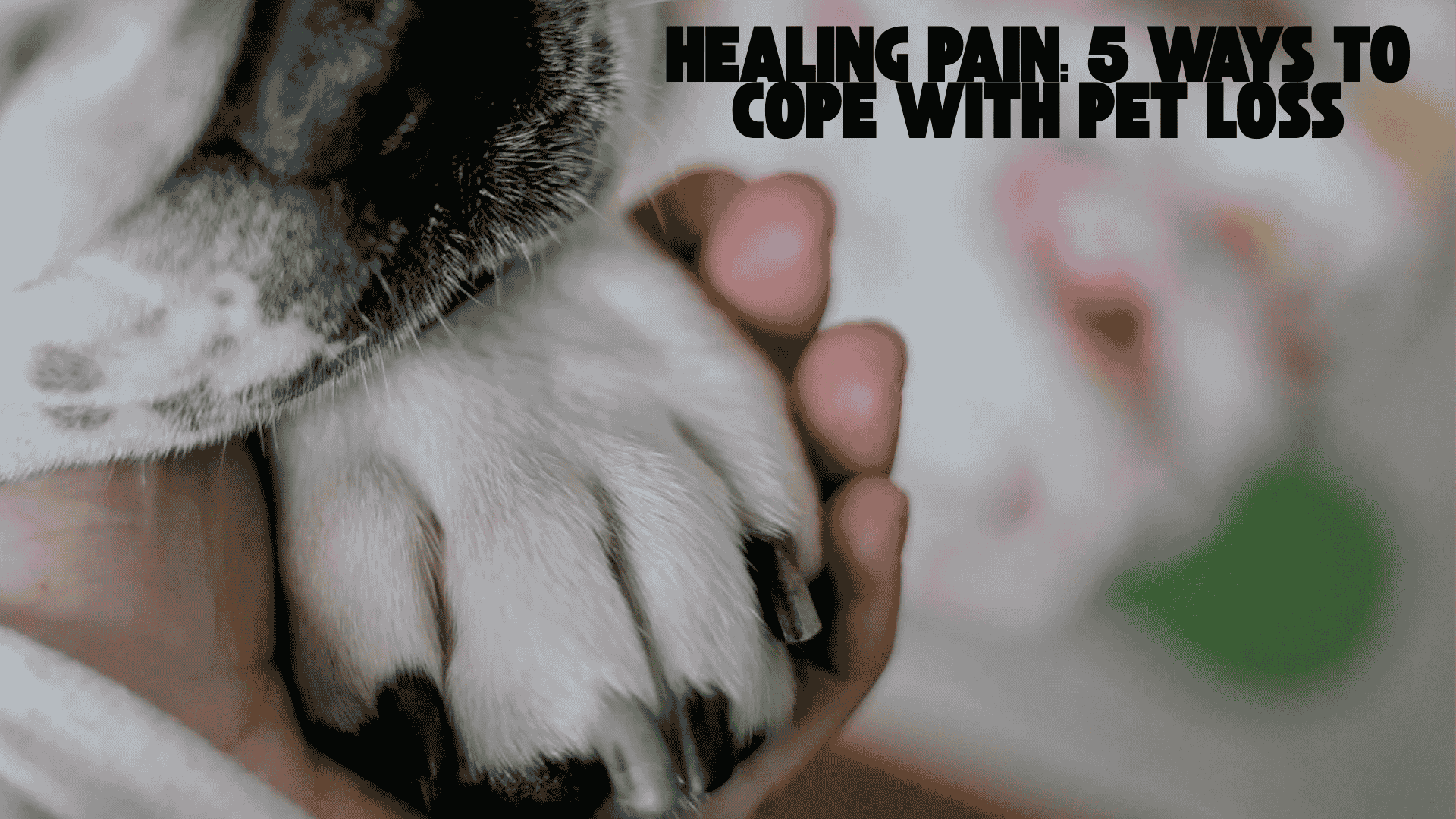
Hello people! Have you experienced the heartache of losing a beloved pet? The bond between humans and pets runs deeper than many realize. Our furry, feathered, or scaled companions are not just animals—they’re family, confidants, and sources of unconditional love. When the time comes to say goodbye, the pain can feel overwhelming, leaving a void that words struggle to fill. Grieving the loss of a pet is a deeply personal journey, often underestimated by others who don’t share the same connection.
Yet, acknowledging this grief is essential for healing. Just like any significant loss, the process requires compassion, patience, and practical coping strategies. In this article, we’ll explore five meaningful ways to cope with pet loss, offering guidance to help you navigate the difficult road from raw pain to gradual peace. Let’s start!
Table of Contents
Section 1: Understanding the Depth of Pet Loss

Before diving into coping strategies, it’s vital to recognize why losing a pet brings such intense pain. Pets offer constant companionship. They don’t judge, hold grudges, or betray. Their love is simple, pure, and consistent. For many, pets are anchors during life’s storms, offering comfort when humans sometimes cannot.
The grief from pet loss is a type of disenfranchised grief—a form of mourning that society often overlooks. People may say things like, “It was just a dog,” or “You can always get another cat,” without realizing these words minimize the profound pain of the bereaved owner. Unlike human loss, pet grief is less acknowledged by workplace leave policies, social norms, or rituals. Yet the emotional wounds run just as deep.
Understanding this context is crucial: you are not “overreacting.” The pain you feel is real, valid, and deserves space for healing.
Section 2: Healing Pain with Rituals and Memorials
One of the first steps in processing grief is to acknowledge the pain through rituals and memorials. Just as humans hold funerals, wakes, or remembrance ceremonies, pets deserve an honoring moment too.
Ideas for Pet Memorials:
- Ceremonies – A small family gathering where you share stories and light candles.
- Keepsakes – Items such as paw-print molds, lockets with fur, or photo albums help preserve memories.
- Memory gardens – Planting a tree or flower in your pet’s honor provides a living tribute.
- Artwork – Commission a portrait, sketch, or even jewelry incorporating ashes.
Rituals validate the significance of the relationship and allow expression of grief in a structured, meaningful way. By acknowledging the pain through tangible remembrance, you transform loss into a lasting symbol of love.
Section 3: Finding Support Systems
Isolation often magnifies pain. Many grieving pet owners hesitate to share their struggles, fearing others won’t understand. Yet, silence only deepens loneliness. Actively seeking support provides both validation and comfort.
Options for Support:
- Friends and family – Share openly with those who knew your pet. Even casual stories can bring warmth.
- Support groups – Pet-loss communities, both online and in person, offer empathy from those who have experienced similar pain.
- Therapists or counselors – Some professionals specialize in grief counseling for pet loss, helping you process emotions constructively.
- Hotlines and resources – Organizations like the Pet Loss Support Hotline (run by some veterinary schools) can provide immediate compassion.
Expressing grief verbally reduces the burden of carrying the pain silently. Surrounding yourself with understanding voices ensures that you don’t navigate grief alone.
Section 4: Creative Expression as Healing
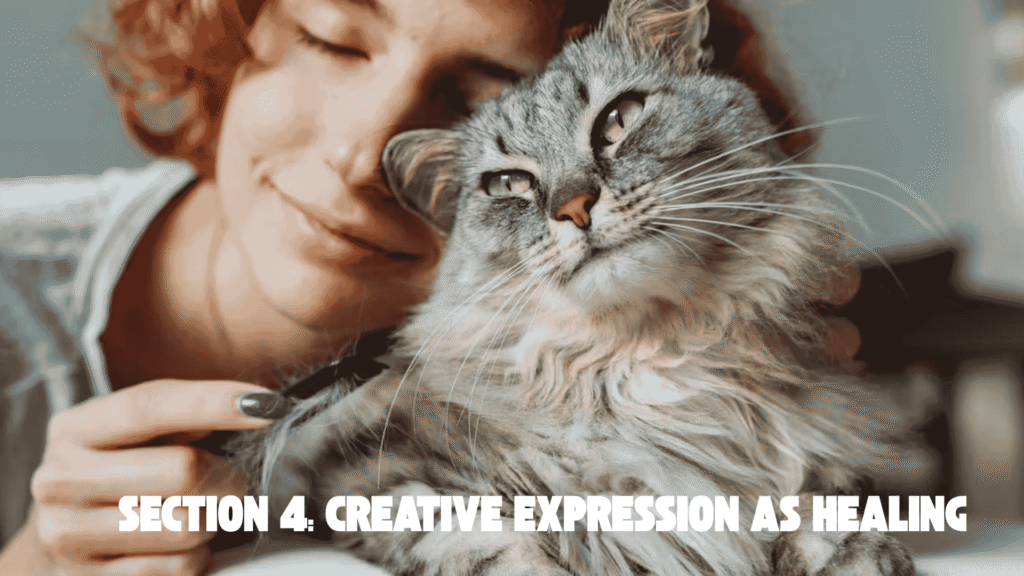
Creativity is a powerful outlet for pain. When emotions feel tangled and indescribable, art, writing, and movement can bypass logic to channel raw feelings into something meaningful.
Healing Through Creative Avenues:
- Journaling – Writing letters to your pet or recording memories keeps their spirit alive on paper.
- Photography projects – Compile your pet’s photos into themed albums, marking milestones or favorite moments.
- Music and poetry – Composing songs or poems allows you to translate grief into artistry.
- Crafts – Designing collars, scrapbooks, or shadow boxes can be therapeutic hands-on projects.
Creative expression doesn’t erase the pain, but it reshapes it. Each creation becomes a tribute, transforming grief into legacy.
Section 5: Caring for Your Body and Mind
Grief is not just emotional—it affects physical health, too. When pain lingers, sleep patterns can falter, appetite may waver, and energy levels dip. The body internalizes sorrow, making self-care essential.
Practical Self-Care Steps:
- Sleep hygiene – Establish routines like dimming lights or practicing deep breathing to combat restlessness.
- Nutritious meals – Comfort food is okay, but balance it with wholesome meals that support healing.
- Movement – Gentle walks, yoga, or stretching release endorphins to counteract grief-induced lethargy.
- Mindfulness – Meditation, prayer, or breathing exercises center the mind when pain feels overwhelming.
- Routine – Maintaining small daily rituals gives a sense of structure amidst chaos.
Taking care of yourself is not selfish—it’s survival. Acknowledging pain means respecting your body’s need for balance and recovery.
Section 6: Embracing the Future with Compassion
Healing doesn’t mean forgetting. Many pet owners worry that moving forward dishonors their lost companion. Yet, true healing involves carrying love into the future without letting pain define every moment.
Some find comfort in adopting another pet when ready, while others honor their loss by volunteering at shelters, fostering animals, or donating to rescue organizations. These acts don’t replace the pet—they extend their legacy.
Compassion toward yourself is key. Healing from pain is not linear. Some days you’ll feel stronger; other days, the grief may resurface sharply. The goal is not to erase the memory but to weave it into the fabric of your life in a way that brings peace.
Section 7: Why Coping with Pet Loss Matters

Ignoring grief or minimizing the pain may cause unresolved emotions to surface later as depression, anxiety, or strained relationships. Addressing loss directly builds emotional resilience and helps maintain mental well-being. Moreover, honoring a pet’s role in your life validates the relationship as real and impactful—not “less than” human bonds.
By coping intentionally, you model healthy grieving for others—children, family members, or friends—who may look to your example for guidance.
Conclusion
Losing a beloved pet is one of the most profound emotional challenges many will ever face. The pain can feel unbearable, but it’s also a testament to the depth of love shared. By creating rituals, seeking support, expressing grief creatively, caring for your body, and practicing self-compassion, you can transform loss into a journey of healing.
Remember, coping is not about “getting over” your pet—it’s about integrating their memory into your life with gratitude instead of despair. Every paw print left on your heart remains, not as a wound but as a cherished mark of unconditional love. With time, the pain softens, leaving behind not emptiness, but a legacy of joy and devotion. How do you honour the memory of your beloved pet?
FAQs
1. How long does the pain of losing a pet last?
Grief has no fixed timeline. Some people feel intense pain for weeks, while others need months or years. Healing is gradual, and it’s normal for waves of sadness to resurface over time.
2. Is it normal to grieve more for a pet than for a person?
Yes. The pain can feel stronger because pets provide unconditional love and daily companionship. The intensity of grief reflects the depth of your bond.
3. Should I get another pet right away?
There’s no rule. Some find comfort in adopting quickly, while others need time. If the pain still feels raw, it may help to wait until you feel emotionally ready.
4. How can I help my child cope with pet loss?
Be honest, acknowledge the pain, and involve them in memorial rituals. Encourage drawing, writing, or storytelling as ways to express feelings.
5. Why does society not take pet grief seriously?
Pet loss is often seen as less significant than human loss, but the pain is just as real. Support groups and pet-focused resources exist to bridge this gap.