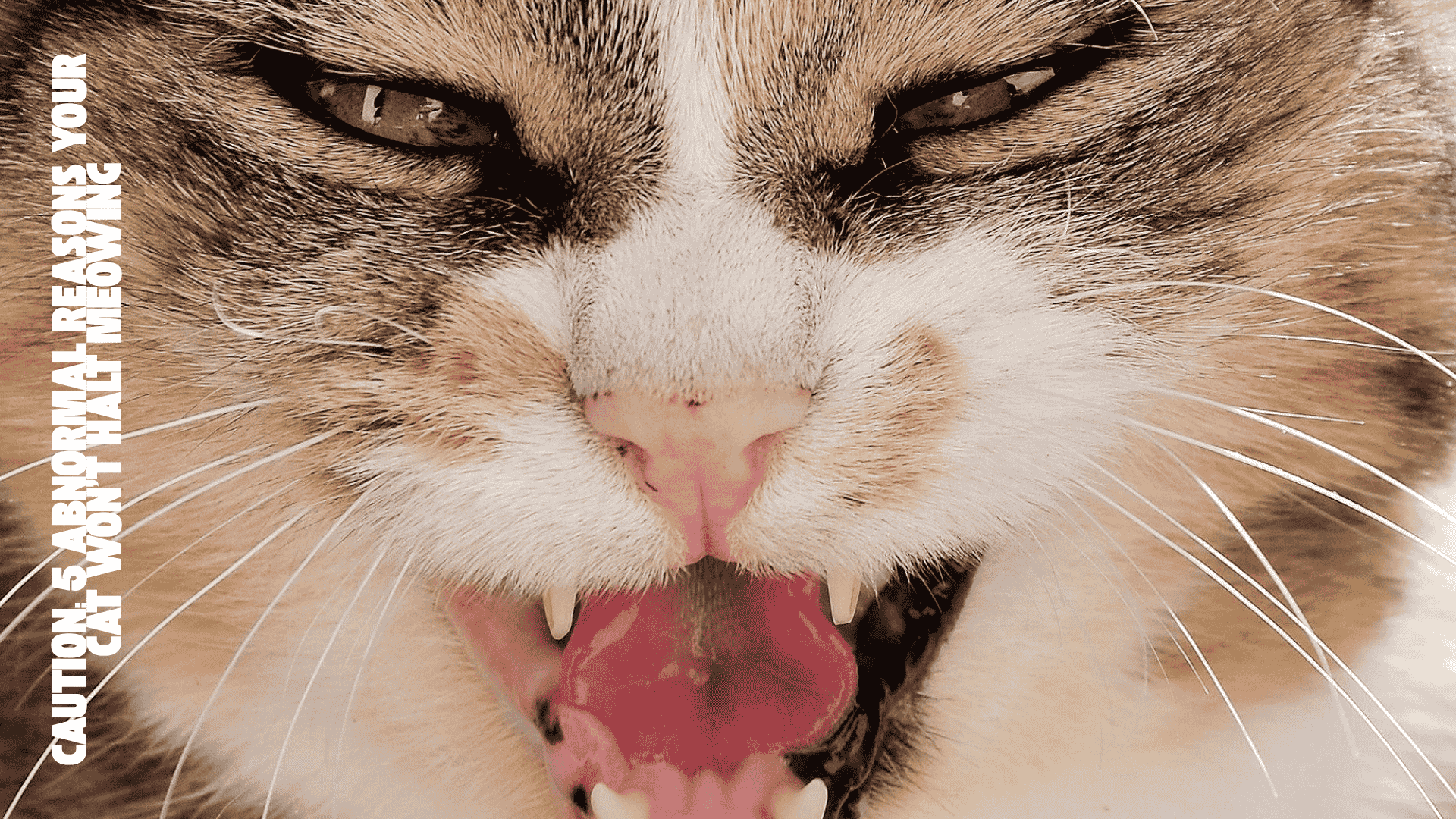
Hello people! Is your cat meowing nonstop? Is your cat meowing nonstop—and you have no clue why? Here’s a caution: it might not be the ordinary starvation cry. Whereas cats are vocal animals, particularly certain breeds like Siamese, over-the-top meowing can flag something interesting. From unusual therapeutic triggers to idiosyncratic enthusiastic needs, cats can be full of shocks. Disregarding these odd signals might cruelly lose a genuine issue or an exceptionally particular need your cat is attempting to express. If your hairy companion won’t shut up talking, it’s time to tune in a small closer. In this direct, we’ll investigate five peculiar but genuine reasons your cat won’t halt meowing—and what each might cruel. Get prepared to interpret the riddle whimpers and secure your pet’s well-being. Let’s start!
Table of Contents
Caution: Ghost Torment from an Ancient Injury

You might not see a limp or scar, but your cat seems to be enduring silently—and vocalizing that inconvenience. Apparition torment isn’t a fair human condition; cats who’ve had wounds, surgeries, or past injury may proceed to feel torment in areas that appear to have healed. This can lead to periods of unexplained, diligent meowing—especially at night or amid minutes of rest. Some cats may relate certain developments or stances with torment, causing them to cry out apparently at irregular intervals. If your cat was ever harmed or experienced surgery—even a long time ago—this might be the offender. A full vet assessment is vital here. Pain-relief arrangements, needle therapy, or indeed cat physical treatment might be necessary.
Warning sign: Meowing while lying down, extending, or bouncing, particularly if matched with jerking or restlessness.
Caution: Compulsive Vocalization from Cat Hyperesthesia Syndrome
Feline Hyperesthesia Disorder (FHS), regularly named “rippling skin disorder,” is one of the most odd conditions a cat can create. It can cause jerking skin, excited behavior, over-the-top prepping, and—you speculated it—loud, visit meowing. Cats with FHS may yowl amid scenes and show up to chase undetectable dangers. A few proprietors botch this for perkiness, but it’s frequently a neurological clutter tied to uneasiness or overstimulation. Triggers incorporate stretch, overstimulation from petting, or indeed, nourishment additives. An appropriate determination includes addressing other restorative issues to begin with. Treatment frequently incorporates calming supplements, uneasiness meds, and changes to the cat’s schedule to diminish physical overload.
Warning sign: Sudden, uproarious meowing went with wild behavior or fits along the back.
Caution: Your Cat Considers It’s Nighttime… All the Time

Here’s an unusual twist—your cat may have a disturbed circadian beat. Cats are crepuscular by nature, meaning they’re most dynamic at daybreak and sunset. But in a few cases, their inner clock gets tossed off totally. This can cause intemperate meowing in the center of the night, when they feel it’s playtime—or bolstering time. This marvel can happen due to manufactured lighting, need for improvement during the day, or aging-related cognitive decay. It’s particularly common in senior cats who may also encounter cat dementia. The arrangement frequently includes enhancing your cat’s daytime environment: intelligent toys, window roosts, and confusing feeders. In a few cases, a vet may prescribe melatonin supplements or other rest aids.
Warning sign: Serious nighttime meowing that appears detached from nourishment, consideration, or the litter box.
Caution: Passionate Echo—They’re Replicating Your Stress
Believe it or not, your cat might be reflecting your passionate state. Cats are greatly keen and regularly tune into their owner’s push, uneasiness, or pity. In a few cases, they “respond” by getting to be more vocal—essentially reverberating your enthusiastic turbulence. This sort of meowing, as a rule, increments when you’re around and may sound more like a “conversation” than a request. Your cat may take after you, make drawn-out eye contact, and yowl delicately or over and over as a way of interacting or advertising comfort . The more pushed or chaotic your environment, the more your cat may vocalize. Incidentally, your cat may be attempting to calm you by communicating, not realizing it’s causing more concern.
Warning sign: Meowing increments around you or guests, particularly amid upsetting life changes.
Caution: Tangible Hardship from a Boring Routine

One of the most peculiar reasons a cat whimpers continuously? She’s essentially bored. Not at all like mutts, cats don’t regularly go for strolls or go to playdates, so their minds require additional stimulation at domestic. Without sufficient mental or physical movement, a few cats resort to consistent vocalization. This is particularly genuine for indoor-only cats, who may gaze out the window and cry—or whimper at you as if to say, “Entertain me!” Cats that once had open air get to or a companion may howl more when those things are removed. Adding assortment to your cat’s life can calm the yowls: window lofts, turning toys, cat TV (on YouTube), and indeed clicker training sessions can all help.
Warning sign: Tireless daytime meowing combined with pacing, gazing at doors/windows, or thumping objects over.
Conclusion
Your cat’s consistent meowing isn’t continuously a basic “feed me” plea—it can be a caution sign of something much more profound. Whether it’s torment from covered-up damage, an odd neurological condition like FHS, passionate reflecting, sleep-cycle disarray, or plain ancient boredom, abnormal causes of meowing can uncover a part around your cat’s well-being.
Understanding the root cause of this behavior is crucial. Overlooking it may be cruel to let a covered-up wellbeing or passionate issue wait. Continuously counsel your vet when meowing gets to be over the top, particularly if matched with changes in vitality, craving, or litter box use.
Another time, your cat won’t halt meowing; treat it not as a disturbance, but as a clue. Your cat might be cautioning you—and trusting you—to make things right. Is your cat’s meowing a warning?
FAQs
Why is my cat meowing at the divider or nothing at all?
This might be a sign of Cat Hyperesthesia Disorder or indeed early cognitive breakdown. A vet check is advised.
Should I overlook my cat when they won’t stop meowing?
No—especially if it’s modern or bizarre behavior. Steady meowing is a caution that something may be off-base physically or emotionally.
Can eating less influence my cat’s vocal behavior?
Yes. Destitute nourishment, fake added substances, or sudden weight changes can lead to behavioral shifts, including expanded meowing.
My cat yowls as it were at night. Is this normal?
Not continuously. It seems to be a sign of sleep-cycle disturbance, maturing, or depression. Enhance their environment and counsel a vet if it persists.
Is consistent meowing ever a fair identity trait?
Some breeds, like Siamese, are normally garrulous. Be that as it may, modern or over-the-top vocalization is more often than not a caution sign worth examining.