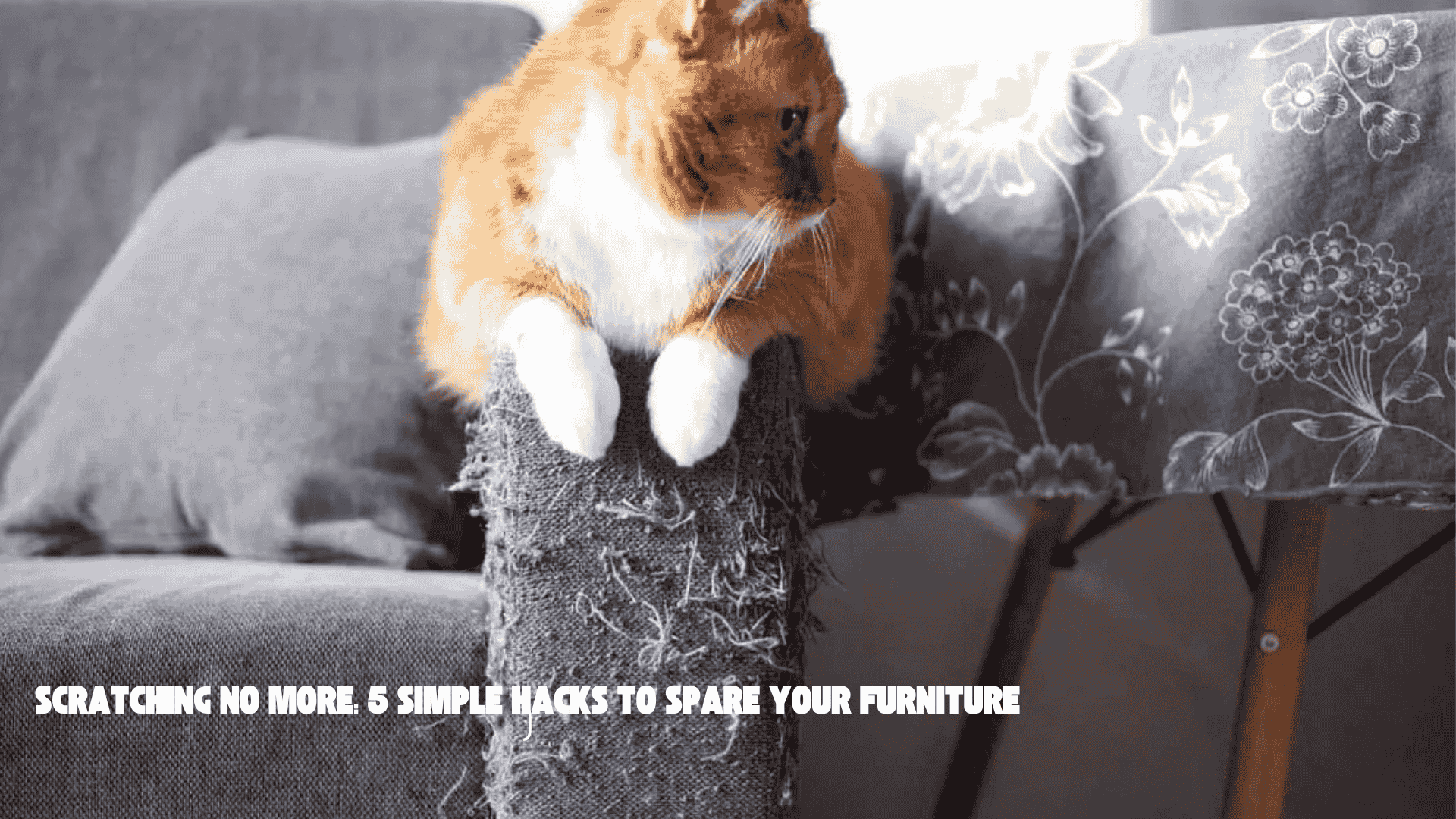
Hello people! Ready to outsmart your cat’s claws? Is your cat turning your furniture into a scratching post? You’re not alone. For most cat proprietors, the battle with scratching is real—and frequently exorbitant. Whereas scratching is a normal and fundamental cat behaviour, it doesn’t have to be cruel to say farewell to your favourite love seat. The great news? You can keep your cat cheerful and your furniture intact.
In this post, we’ll uncover five simple hacks that’ll offer assistance divert your cat’s claws absent from your couch and toward more suitable surfaces. From keen furniture choices to intelligent obstacles, these traps are basic, reasonable, and viable. If you’re prepared for peace, paws, and protected upholstery, study on. These tips are your to begin with step toward a scratching-free home—without compromising your cat’s well-being. Let’s start!
Table of Contents
Why Cats Scratch: A Common Instinct
Before you can unravel the scratching issue, it’s imperative to get it why your cat does it in the to begin with place.
Cats don’t scratch furniture out of show disdain toward or terrible behavior—they do it for a few critical reasons:
Claw Upkeep: Scratching makes a difference, shedding the dead external layer of their claws, and keeps them sharp.
Territory Stamping: Cats have fragrance organs in their paws. When they scratch, they take off both a visual and fragrance stamp to claim territory.
Stretching & Working Out: Scratching gives cats a great extend and makes a difference flex their feet and claws.
Stress Help: Cats may scratch more when they’re on edge or overstimulated.
This behavior is established. You can’t halt cats from scratching—but you can prepare them to scratch in worthy places.
Hack #1: Offer Overwhelming Scratching Alternatives

One of the most viable ways to halt cats from pulverizing furniture is to provide them with something better to scratch.
✅ Give Different Scratching Posts
Invest in a few scratching posts and put them deliberately around your home—especially close to furniture they as a rule target. See posts that are:
Tall and tough: Cats adore a great stretch.
Textured: Sisal rope is a favorite.
Different shapes: Vertical posts, flat cushions, and calculated slopes cater to different scratching preferences.
✅ Include Cat Trees and Cardboard Scratchers
Many cats appreciate scratching cardboard or delicate wood surfaces. Incorporate an assortment of materials and orientations.
Pro tip: Sprinkle catnip or utilize silvervine shower on scratchers to increase attraction.
✅ Arrangement Is Everything
If your cat scratches the lounge chair, put a post right another to it. Once your cat switches targets, steadily move the post away.
Hack #2: Make Your Furniture Unappealing to Scratches
If you demand that your cat stop scratching the furniture, you have to make it less fun to scratch.
✅ Utilize Double-Sided Tape
Cats despise sticky surfaces. Apply cat-safe double-sided tape to the ranges they target—like sofa arms or chair corners.
Brands like Sticky Paws are outlined for this reason and won’t harm your fabric.
✅ Attempt Plastic or Vinyl Furniture Shields
Transparent defenders can be clipped or followed to your lounge chair. These make the surface as well smooth for fulfilling scratching.
✅ Utilize Fragrances Cats Dislike
Citrus-based sprays, lavender, or commercial anti-scratch sprays can help prevent cats. Test a little texture zone to begin with to dodge discoloration.
Caution: Never use solid chemicals or essential oils that are not labeled as safe for cats.
Hack #3: Trim Your Cat’s Claws Regularly
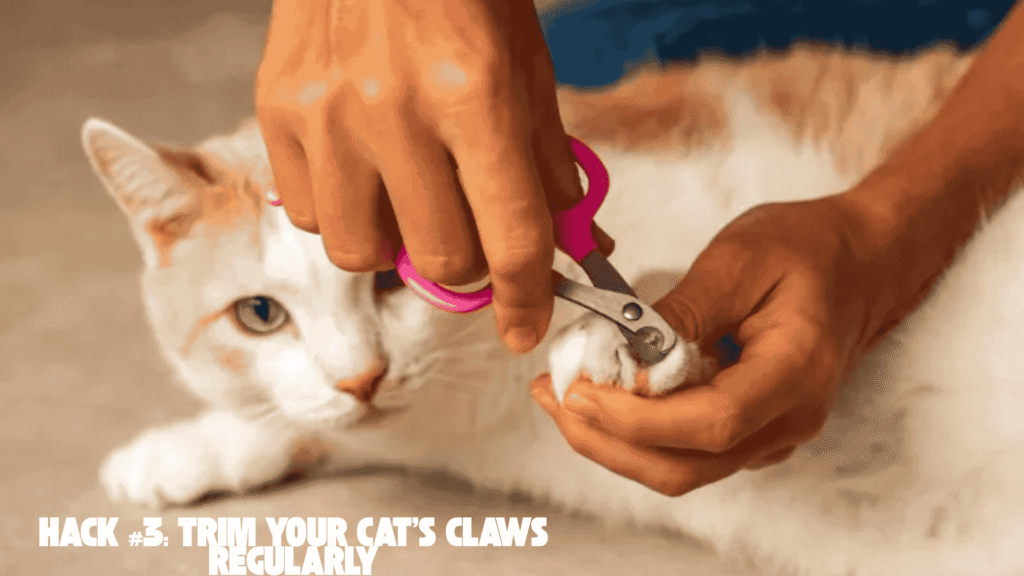
Long claws = more dangerous scratching. Keeping your cat’s nails trimmed is essential.
✅ How to Trim Safely
- Use pet-safe nail clippers.
- Start moderate and calm. Trim the tips.
- Don’t cut as close to the pink “quick,” which contains blood vessels.
- If you’re uncertain, a vet or groomer can help.
✅ Benefits of Trimming
- Reduces harm from inadvertent or purposeful scratching.
- Lessens the requirement for forceful scratching behavior.
- Prevents tangles on texture, carpet, or your skin.
- If you make nail trimming a customary schedule, you’ll diminish wear and tear on both your furniture and your nerves.
Hack #4: Utilize Positive Fortification, Not Punishment
Punishing your cat for scratching, as it were, causes disarray and push. Instep, prepare them utilizing rewards.
✅ Commend and Treat When They Utilize the Right Surface
When your cat employments a scratching post, compensate promptly with treats, toys, or verbal praise.
✅ Divert and Reward
If you capture them in the act, calmly divert them to the post or scratcher. Once they utilize it, remunerate them.
✅ Consistency Is Key
Cats flourish on schedule. Make the positive behavior fulfilling each time—eventually, it will stick.
Avoid hollering, water splashes, or discipline. These make fear, not understanding.
Hack #5: Select Cat-Friendly Furniture and Fabrics
If you’re shopping for unused furniture or arranging a domestic makeover, select alternatives that stand up to scratching.
✅ Best Textures to Discourage Scratching
Microfiber (aka microsuede): Solid and smooth; cats do not like the feel.
Tightly woven textures: Less surface implies less appeal.
Leather or faux calfskin: Harder to sink claws into.
Avoid:
Loosely woven textures: These are claw magnets.
Tweed or chenille: Profoundly appealing to scratching cats.
✅ Consider Encased Furniture Legs or Slipcovers
- Cats frequently target sofa corners or wooden legs. Wrap these zones in defensive covers or select enclosed-leg designs.
- Bonus Tips for Determined Scratchers
- Sometimes you require more than fair hacks. Here are a few reward strategies:
🐾 Utilize a Schedule to Avoid Boredom
Bored cats scratch more. Play with your cat every day utilizing wand toys, astound feeders, and climbing towers.
🐾 Give Vertical and Even Territory
Cat trees, racks, and lofts provide your cat space to investigate and use energy, reducing dangerous tendencies.
🐾 Attempt Delicate Nail Caps
Products like Delicate Paws cover your cat’s claws with silicone caps that anticipate harm while still permitting scratching.
They need to be supplanted every 4–6 weeks and are vet-approved for safety.
What’s Around Declawing? A Firm No.
Declawing is in some cases considered a solution—but it’s not humane.
It includes removing the final bone of each toe—not fair to evacuate the claw. This can lead to:
- Chronic pain
- Behavioral problems
- Difficulty walking
Declawing is prohibited in numerous nations and unequivocally discouraged by veterinary organizations. Instep, center on the hacks above—they’re viable and kind.
Real-Life Victory Story

When Michelle received her two protective cats, they instantly began scratching her modern velvet couch. After attempting showers and reproving (which didn’t work), she chose to attempt the five hacks:
- She included three sisal posts close to her furniture.
- She utilized tape and citrus shower on her love seat arms.
- She trimmed their claws every two weeks.
- She remunerated them with treats when they utilized the posts.
- And she bought a microfiber cover for the sofa.
- Within a month, the scratching ceased. “Now they, as it were, scratch the posts—and my furniture is safe,” she says. “The best portion? I didn’t have to holler once.”
Conclusion
Scratching is a typical and sound behaviour—but your furniture doesn’t have to endure because of it. With the right technique, you can divert your cat’s claws to more secure surfaces without causing pain or turning to extreme measures. These five present hacks—offering alluring selections, applying barriers, trimming nails, bracing superb tendency, and picking cat-resistant furniture—will confirm your present and keep your cat joyful.
Consider: consistency, leniency, and munificence are key. With time, your cat will learn what’s logical fun for scratching—and what isn’t. So breathe simple. Your lounge chair, chair legs, and window ornaments can survive life with a cat. Fair apply these tips and observe the change start. A scratch-free domestic is inside reach. How can you stop your cat from scratching furniture?
FAQs
Why does my cat disregard the scratching post?
Your cat may not like the fabric, area, or stature. Attempt a sisal-covered vertical post close to the region they as a rule scratch and utilize catnip to draw in them.
How regularly ought I trim my cat’s claws?
Every 2–3 weeks is perfect. A few cats may require more visit trims depending on age and movement level.
Are anti-scratch splashes secure for cats?
Only utilize splashes labeled secure for pets. Dodge fundamental oils unless they’re vet-approved. Continuously test a fix first.
Can scratching be a sign of stress?
Yes. Expanded scratching may demonstrate uneasiness or boredom. Attempt including improvement exercises or calming pheromone diffusers.
Do scratching posts truly work?
Absolutely—if utilized accurately. Offer assortment, compensate great behavior, and put them where your cat currently scratches.