Hello people! Would you know if your cat was trying to tell you something’s wrong? Cats are scholars at revealing distress, and their hidden signs of disease can constantly go unnoticed—until it’s too late. That’s why understanding the ruddy banners that demonstrate a genuine issue is pivotal for each cat parent. This vet alarm is your direct route to recognizing the 7 most perilous signs that your cat might require prompt veterinary consideration.
Whether you’re managing a sudden alteration in craving or unusual lavatory movements, these indications may flag a more profound, possibly life-threatening issue. Acting rapidly can make all the difference between a minor panic and a major crisis. So if you’ve ever pondered, “Is this normal?”—this is your must-read checklist. Let’s plunge into the signs you ought never to overlook when it comes to your cat friend. Let’s start!
Table of Contents
Vet Alarm 1: Sudden Misfortune of Appetite
Cats may skip a supper presently and at that point, but a sudden refusal to eat for more than 24 hours ought to sound a loud vet caution. Not at all like pooches, cats can rapidly create a genuine condition called hepatic lipidosis (greasy liver infection) if they stop eating.
What to Observe For:
- Complete refusal to eat for 24+ hours
- Only licking nourishment, but not chewing
- Losing weight rapidly
Why It’s Dangerous:
Cats depend on consistent nourishment. Without nourishment, their bodies begin to metabolize fat too rapidly, overwhelming the liver. This is particularly unsafe in overweight cats.
What to Do:
Don’t hold up. Offer strong-smelling nourishment (like fish) to test the craving, but if your cat continues to deny nourishment, call your vet immediately.
Vet Alarm 2: Labored or Fast Breathing
Is your cat breathing quickly, gasping, or battling to capture their breath? Not at all like mutts, cats don’t gasp unless something is wrong.
What to Observe For:
- Panting or open-mouth breathing
- Breathing with the paunch of the chest
- Hiding or squatting in odd positions to breathe easier
What to Do:
Don’t endeavor to transport them in a carrier without talking to a vet to begin with. Labored breathing is a high-level vet caution that warrants a crisis visit.
Vet Caution 3: Sudden Dormancy or Collapse
Is your lively cat abruptly slow, stowing away all day, or incapable of getting up? This isn’t fair laziness—it seems to be a caution of something serious.
What to Observe For:
- Lack of intrigued in toys or interaction
- Not reacting to commotions or movement
- Sleeping much more than normal or collapsing
Why It’s Dangerous:
Lethargy can be a sign of inner dying, disease, organ failure, or harm. Cats that show up “just tired” may be enduring in silence.
What to Do:
Try tenderly waking or coaxing them with nourishment or treats. If there’s no reaction, this is a solid vet alert—seek offer assistance immediately.
Vet Caution 4: Heaving or Loose bowels (Particularly Bloody)

Occasional hairballs are ordinary. Visit spewing or diarrhea—especially if it’s bloody—is not.
What to Observe For:
- Vomiting more than twice a day
- Watery or ridiculous diarrhea
- Refusal to eat or drink
- Dehydration (check skin elasticity)
Why It’s Dangerous:
Cats can gotten to be perilously dry in a fair day or two. Visit spewing or the runs may show parasites, poisons, blockages, or infections.
What to Do:
Collect a stool or upchuck test in a fixed pack for your vet. If side effects endure more than 24 hours or decline, consider this a high-priority vet alert.
Vet Alarm 5: Trouble Utilizing the Litter Box
Changes in litter box behavior frequently point to torment, contamination, or indeed life-threatening urinary blockages.
What to Observe For:
- Straining or crying while urinating
- Frequent endeavors but small output
- Blood in pee or stool
- Avoiding the box altogether
Why It’s Dangerous:
Male cats, in particular, are inclined to urinary blockages, which can lead to kidney failure or passing in 24–48 hours.
What to Do:
A single missed pee or crap might not be disturbing, but different endeavors with no result ought to raise a genuine vet alarm. Get offer assistance fast.
Vet Caution 6: Bizarre Vocalization or Behavior Changes
You know your cat’s “normal.” If they quickly act differently—whether louder, more peaceful, clingier, or more aggressive—something might be vastly wrong.
What to Observe For:
- Excessive meowing, crying, or silence
- Sudden hostility or hiding
- Fearfulness or confusion
- Ignoring recognizable routines
Why It’s Dangerous:
Drastic behavior changes can flag neurological issues, torment, or metabolic clutters like hyperthyroidism.
What to Do:
Note when the changes started and whether they came with physical side effects. If the behavior is diligent or extraordinary, this is a behavioral vet caution that merits an exam.
Vet Caution 7: Release, Swelling, or Wounds
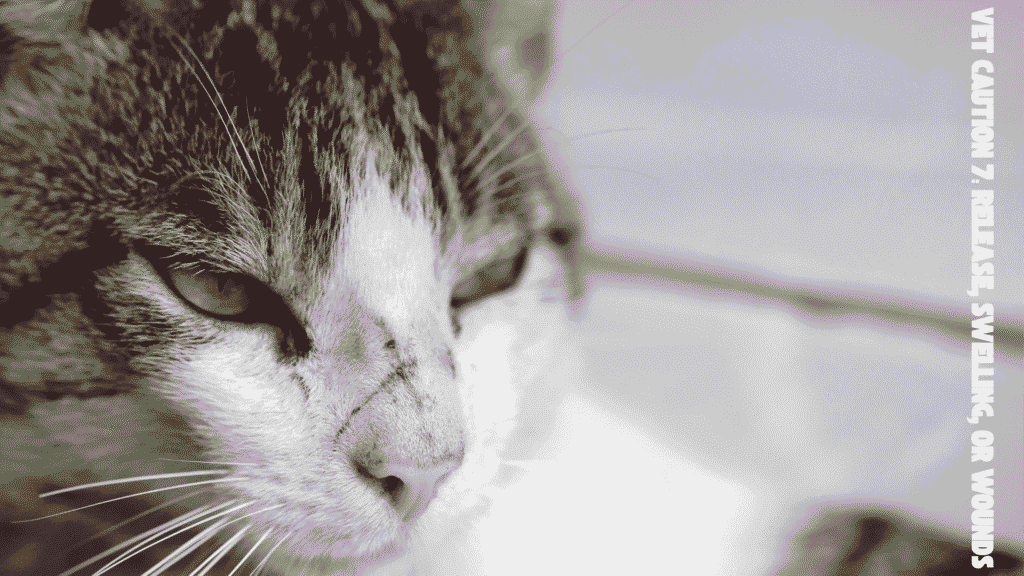
Visible physical side effects, particularly when they show up abruptly, can cruel injury, disease, or a fundamental disease.
What to Observe For:
- Swollen eyes or limbs
- Pus or free from eyes, ears, or wounds
- Abscesses (cluster below the skin)
- Bleeding from the nose, mouth, or rear
Why It’s Dangerous:
These signs can show chomp wounds, dental abscesses, diseases, or tumors. Cats regularly lick or swallow away these indications, so early detection is critical.
What to Do:
Clean minor wounds with saline and keep your cat inside. But swelling, release, or anything that declines is a clear vet caution. Don’t wait.
When in Question, Believe Your Gut
Cats can’t tell you where it hurts, so believe your instinct. If something feels “off,” you’re likely right. This is the center of any vet alarm framework: Watch, Respond, and Act. Early mediation can be the contrast between a treatable issue and a deplorable emergency.
Conclusion
Your cat depends on you to be their voice and their advocate. Whereas a few side effects can be mellow or short-lived, others are genuine and require quick consideration. Understanding the 7 vet alarm signs secured in this guide—like sudden laziness, breathing inconvenience, or changes in litter habits—can spare your cat’s life.
Cats may appear intense and autonomous, but indeed, a little move in their schedule can show a major issue underneath the surface. Do not hold up and ponder. When in question, call your vet. A convenient checkup or crisis visit is always way better than lamenting. Believe your instinctual, watch closely, and be prepared to act. Your fast reaction can be the difference between emergency and recuperation in your adored cat companion. What cat change mean for a vet visit?
FAQs
How do I know if my cat’s behavior alteration is serious?
If the behavior is sudden, extraordinary, or matched with physical side effects (like craving misfortune), it’s a vet alarm worth checking.
Is one missed feast a reason to panic?
Not always—but skipping dinners for over 24 hours, particularly with weight misfortune, is a perilous sign. Contact your vet.
Can cats fake being okay?
Absolutely. Cats’ impulses stow away torment. That’s why inconspicuous signs like stowing away or moo vitality ought to trigger concern.
How do I check for lack of hydration in my cat?
Gently lift the skin between the shoulders. If it doesn’t snap back rapidly, your cat may be dehydrated.
What ought I do some time recently, heading to the crisis vet?
Call ahead, depict the indications, and follow their transport informational. In respiratory trouble cases, don’t delay.